


Allergen Testing
Allergen Testing is the analysis of food products to detect allergenic substances that may cause allergic reactions in susceptible individuals. The testing helps ensure food safety, regulatory compliance, and accurate allergen declaration on product labels.
[Detailed Description ]
Advanced Allergen Testing & Risk Assessment Solutions
Food allergens are naturally occurring proteins that can trigger adverse immune responses in sensitive individuals. Common allergens include milk, peanuts, tree nuts, soy, wheat/gluten, eggs, fish, shellfish, and sesame. The presence of these allergens in food, whether intentional or due to accidental cross-contact during manufacturing, can pose significant health risks.
Allergen testing is conducted to identify and quantify these substances in raw materials, finished products, environmental samples, and processing equipment. Reliable detection is essential for validating allergen control measures, preventing cross-contamination, and ensuring compliance with food safety regulations and labelling requirements.
At BAS, allergen analysis is performed using advanced analytical techniques such as ELISA and PCR, which provide high sensitivity and specificity for the detection of allergenic proteins or their genetic markers. These methods enable accurate testing across diverse food matrices, including highly processed products.
Our allergen testing services support food manufacturers, exporters, retailers, and regulatory agencies in maintaining product integrity, protecting consumers, and demonstrating compliance with national and international food safety standards.
Key Parameters Covered
Comprehensive allergen assessment covering allergen detection, cross-contamination analysis, ingredient verification, label compliance, and specialised food safety testing.

Milk Allergens
Detects milk proteins such as casein and whey that may trigger allergic reactions

Soy Allergens
Identifies soy proteins commonly used in processed foods and ingredients

Pathogen Detection & Bio-burden
Qualitative/Quantitative pathogen identification and bio-burden estimation

Peanut Allergens
Detects peanut residues that can cause severe allergic responses.

Fish Allergens
Identifies allergenic proteins originating from fish and fish-based ingredients.

Listeria
monocytogenes
Detection in ready-to-eat and high-risk food categories

Tree Nut Allergens
Screens for allergens from almonds, cashews, walnuts, pistachios, and other tree nuts.

Enterobacteriaceae
Broad family detection for contamination screening

Yeast & Mould
Count
Fungal contamination detection and enumeration
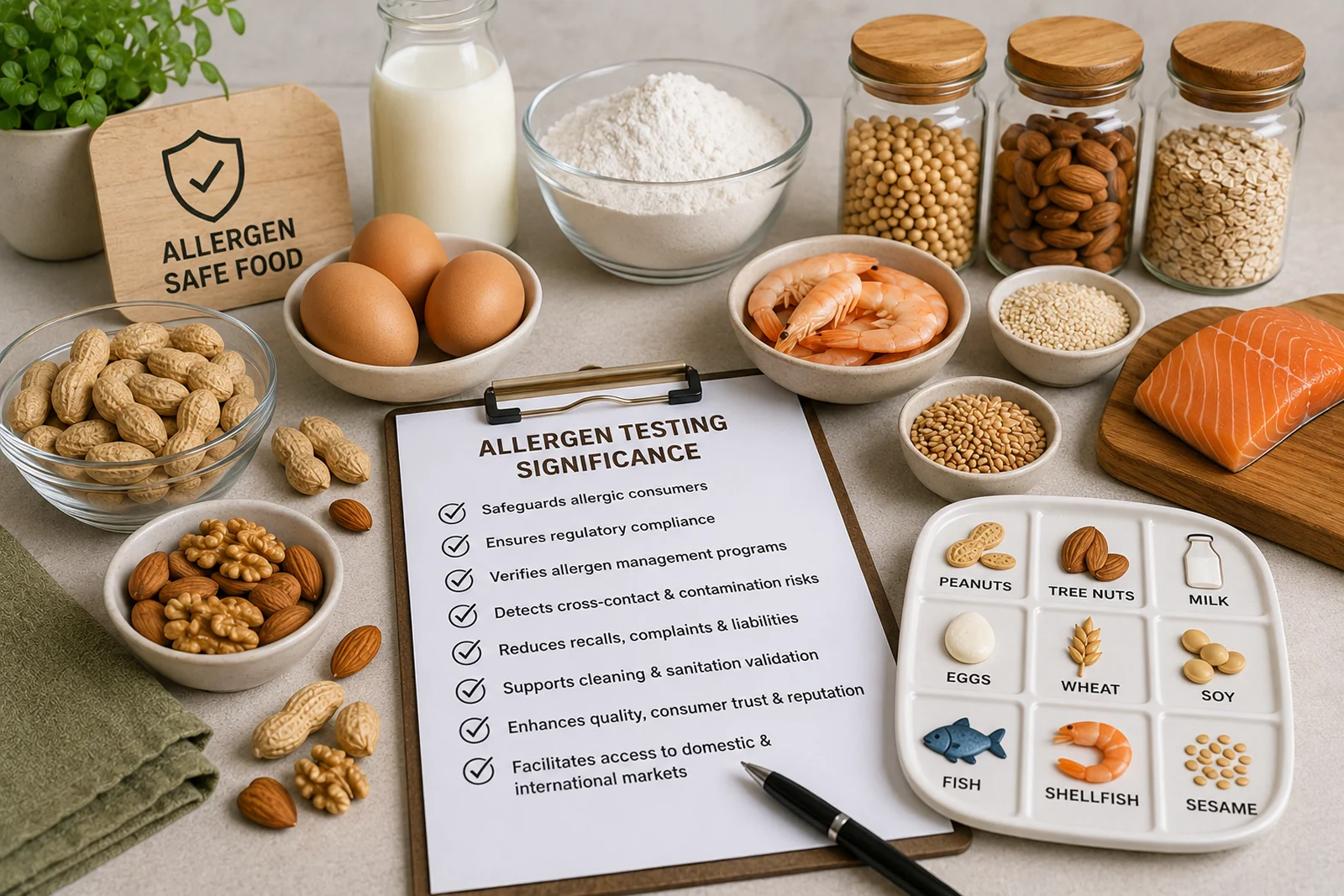
We at BAS provide accurate and reliable allergen testing using validated analytical methods to support regulatory compliance, consumer safety, and product quality. Our services include allergen detection, cross-contamination assessment, ingredient verification, label claim validation, and allergen risk management across a wide range of food products.
Significance
Allergen testing is an essential tool for food safety management, helping the food industry deliver safe, compliant, and accurately labelled products to consumers.
Safeguards allergic consumers from unintended exposure to allergenic substances.
Ensures compliance with food labelling and regulatory requirements.
Helps manufacturers verify the effectiveness of allergen management programs.
Detects cross-contact and contamination risks during production and storage.
- Reduces the likelihood of product recalls, consumer complaints, and legal liabilities.
- Supports validation of cleaning and sanitation procedures.
- Enhances product quality, consumer trust, and brand reputation.
- Facilitates access to domestic and international markets by meeting customer and regulatory expectations
[FAQ]
Frequently Asked Questions
What is allergen testing?
Allergen testing is the process of detecting and identifying allergenic substances in food, beverages, ingredients, and manufacturing environments to ensure product safety and compliance.
Why is allergen testing important?
Allergen testing helps protect consumers with food allergies, prevents cross-contamination, supports accurate product labeling, and ensures compliance with food safety regulations.
Which allergens can be tested?
Common allergens tested include milk, eggs, peanuts, tree nuts, soy, wheat, fish, shellfish, sesame, and other allergens specified by regulatory authorities.
Who should conduct allergen testing?
Food manufacturers, ingredient suppliers, processors, exporters, and quality assurance teams should conduct allergen testing to verify product safety and labeling accuracy.
How is allergen testing performed?
Allergen testing is typically carried out using advanced analytical techniques such as ELISA, PCR, and other validated methods to accurately detect allergenic substances in products and production environments.
Comprehensive Microbiology Testing
Partner with BAS for comprehensive microbiology testing services designed to detect harmful microorganisms and assess product safety. Our advanced laboratory methods help ensure quality, regulatory compliance, and consumer protection across food, water, pharmaceutical, and environmental samples.