
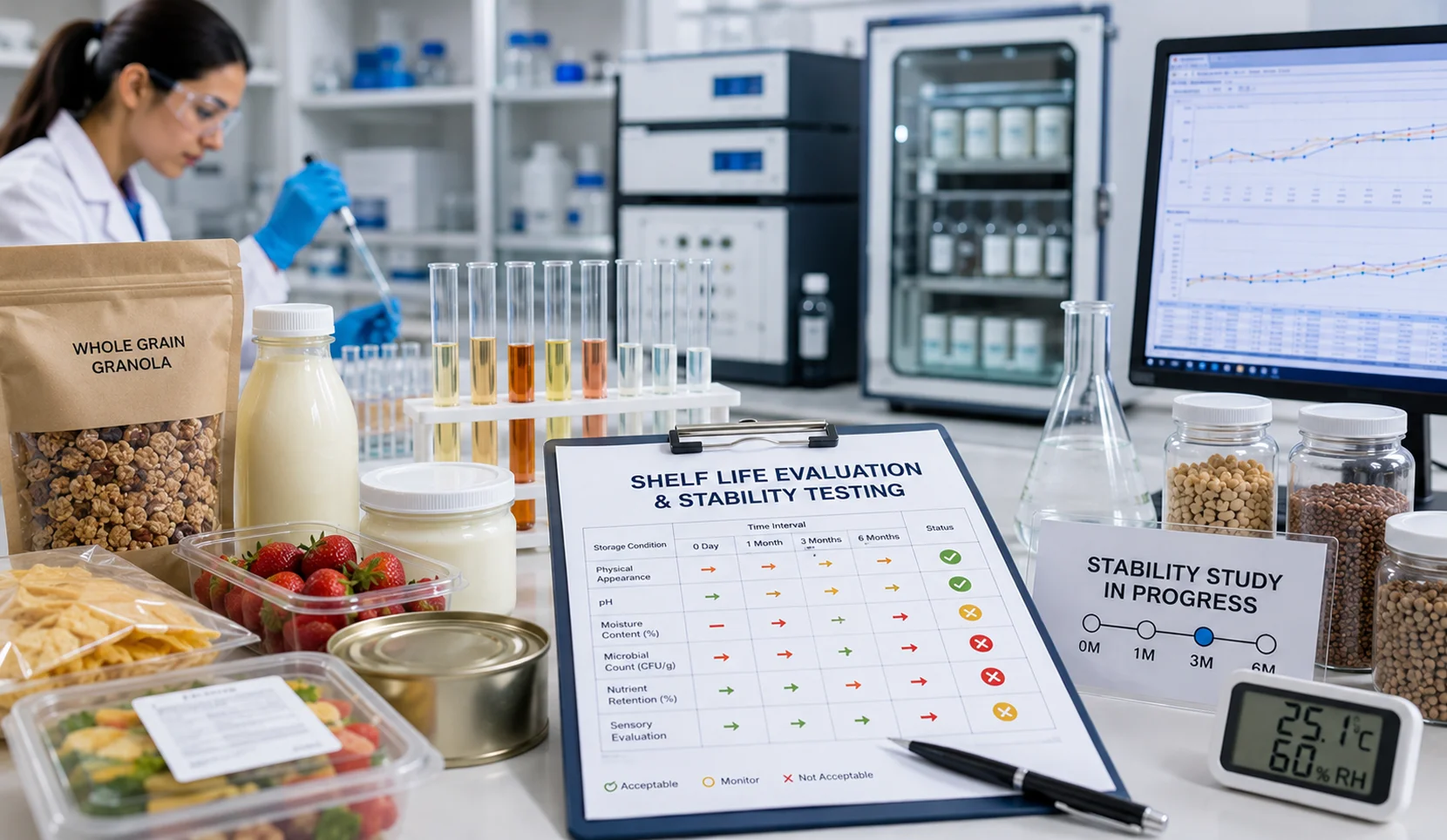

Shelf Life Studies
Shelf life studies determine the stability and safe consumption period of products under defined storage conditions, ensuring quality, safety, and regulatory compliance.
[Detailed Description ]
Comprehensive Shelf Life Evaluation & Stability Testing
Shelf life studies are essential to evaluate how a product’s quality, safety, and performance change over time under specified environmental conditions. These studies help determine the product’s expiry date or “best before” period by monitoring physical, chemical, microbiological, and sensory parameters throughout its storage lifecycle. Both real-time (long-term) and accelerated shelf life studies are conducted based on product type and market requirements.
Real-time studies assess product stability under normal storage conditions, while accelerated studies use elevated temperature and humidity conditions to predict shelf life within a shorter duration. Key parameters monitored may include moisture content, pH, rancidity, microbial growth, preservative effectiveness, packaging integrity, and organoleptic properties such as taste, colour, texture, and odour. All studies are conducted using validated protocols, ensuring scientific accuracy, traceability, and regulatory acceptance.
Key Parameters Covered
A thorough multi-parameter approach monitoring physical, chemical, microbiological, and sensory changes throughout the product’s storage lifecycle.

Microbiological Stability
TVC, Yeast & Mould, Pathogens

Nutritional Stability
Retention of vitamins, minerals and macronutrients over time

Physicochemical Parameters
pH, Moisture, Water Activity

Preservative Efficacy
Effectiveness of preservatives throughout the product's shelf life

Rancidity Indicators
Peroxide Value, Free Fatty Acids

Packaging Integrity
Seal strength, barrier properties and material compatibility

Sensory Evaluation
Colour, Taste, Texture, Odour
We at BAS provide reliable shelf life testing using controlled testing conditions and validated methodologies. Our studies help manufacturers set accurate expiry dates, monitor physical, chemical, and microbiological changes, and meet regulatory requirements with confidence.
Significance
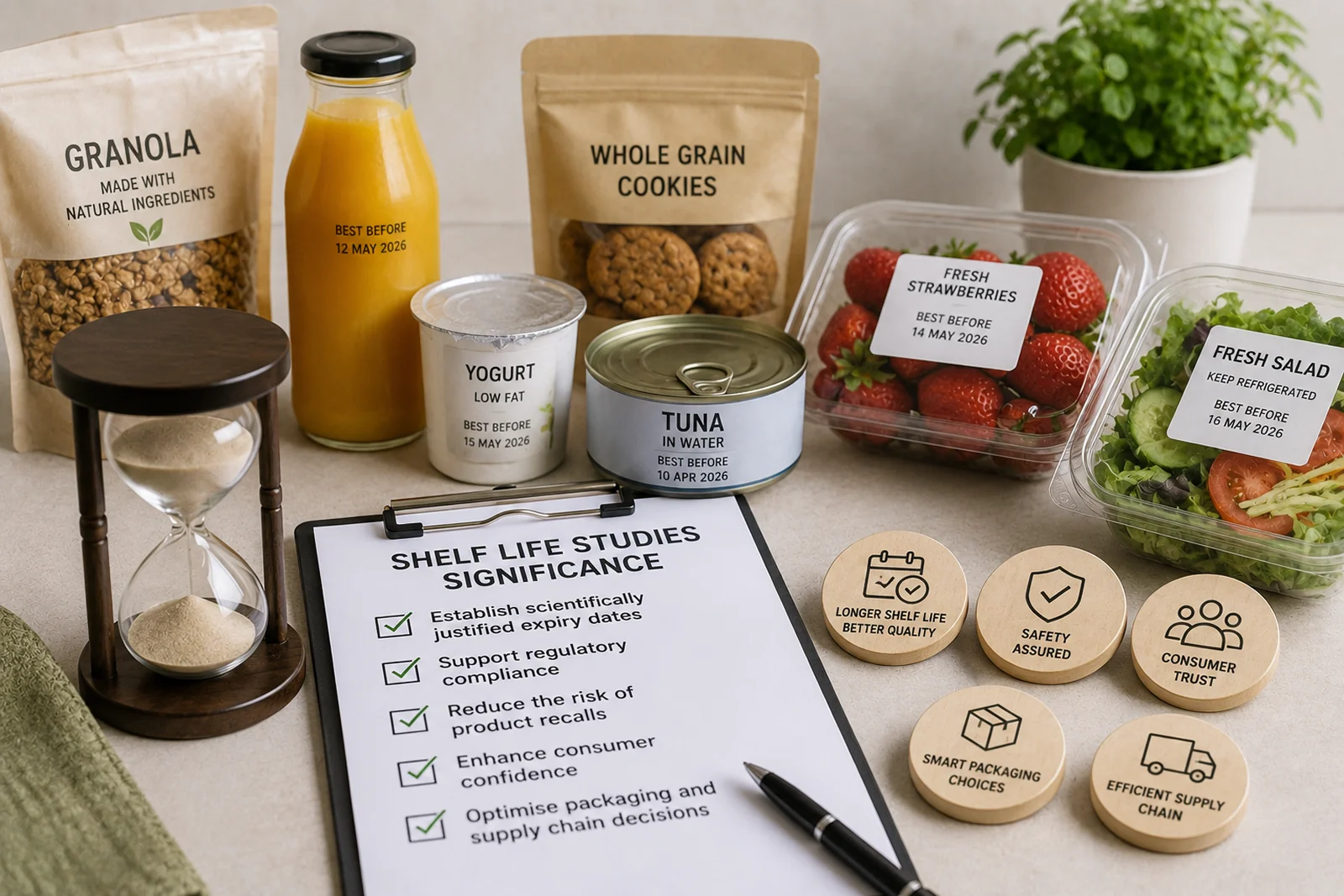
Shelf life studies are critical for determining product stability, safety, and marketability. They help manufacturers establish scientifically justified expiry dates, ensuring that products remain safe and retain their quality throughout storage and distribution.
These studies also support regulatory compliance, reduce the risk of product recalls, and enhance consumer confidence. Additionally, they play a key role in product development, packaging selection, and supply chain optimisation.
- Establish scientifically justified expiry dates
- Support regulatory compliance
- Reduce the risk of product recalls
- Enhance consumer confidence
- Optimise packaging and supply chain decisions
[FAQ]
Frequently Asked Questions
What are shelf life studies?
Shelf life studies are systematic evaluations that determine how long a product remains safe and maintains its intended quality under specified storage conditions. They help establish accurate expiry dates and “best before” periods by monitoring physical, chemical, microbiological, and sensory parameters over time.
What is the difference between real-time and accelerated shelf life studies?
Real-time shelf life studies assess product stability under normal, intended storage conditions over the full expected shelf life period. Accelerated shelf life studies use elevated temperature and humidity conditions to simulate the effects of ageing in a shorter time frame, allowing manufacturers to predict shelf life more quickly without waiting for the full duration of a real-time study.
What parameters are monitored during shelf life testing?
Key parameters monitored include microbiological stability (TVC, Yeast & Mould, Pathogens), physicochemical parameters (pH, moisture, water activity), rancidity indicators (peroxide value, free fatty acids), nutritional stability, preservative efficacy, sensory attributes (colour, taste, texture, odour), and packaging integrity. The specific parameters tested depend on the product type and regulatory requirements.
How do shelf life studies support regulatory compliance?
Shelf life studies provide the scientific data required by regulatory authorities to substantiate expiry dates and label claims. All our studies are conducted using validated protocols that ensure accuracy, traceability, and regulatory acceptance, helping manufacturers meet local and international food safety and quality standards.
Which product types can undergo shelf life testing?
Shelf life studies are applicable to a wide range of products including food and beverages, dietary supplements, nutraceuticals, animal feed, cosmetics, and pharmaceutical products. The testing approach and parameters evaluated are tailored to the specific product category and its intended market.
Accurate Shelf Life Studies
Partner with BAS for comprehensive shelf life studies that evaluate product stability, quality, and safety over time. Our testing services help manufacturers determine accurate expiry dates, ensure regulatory compliance, and maintain consumer confidence.