
Amino Acid Profiling
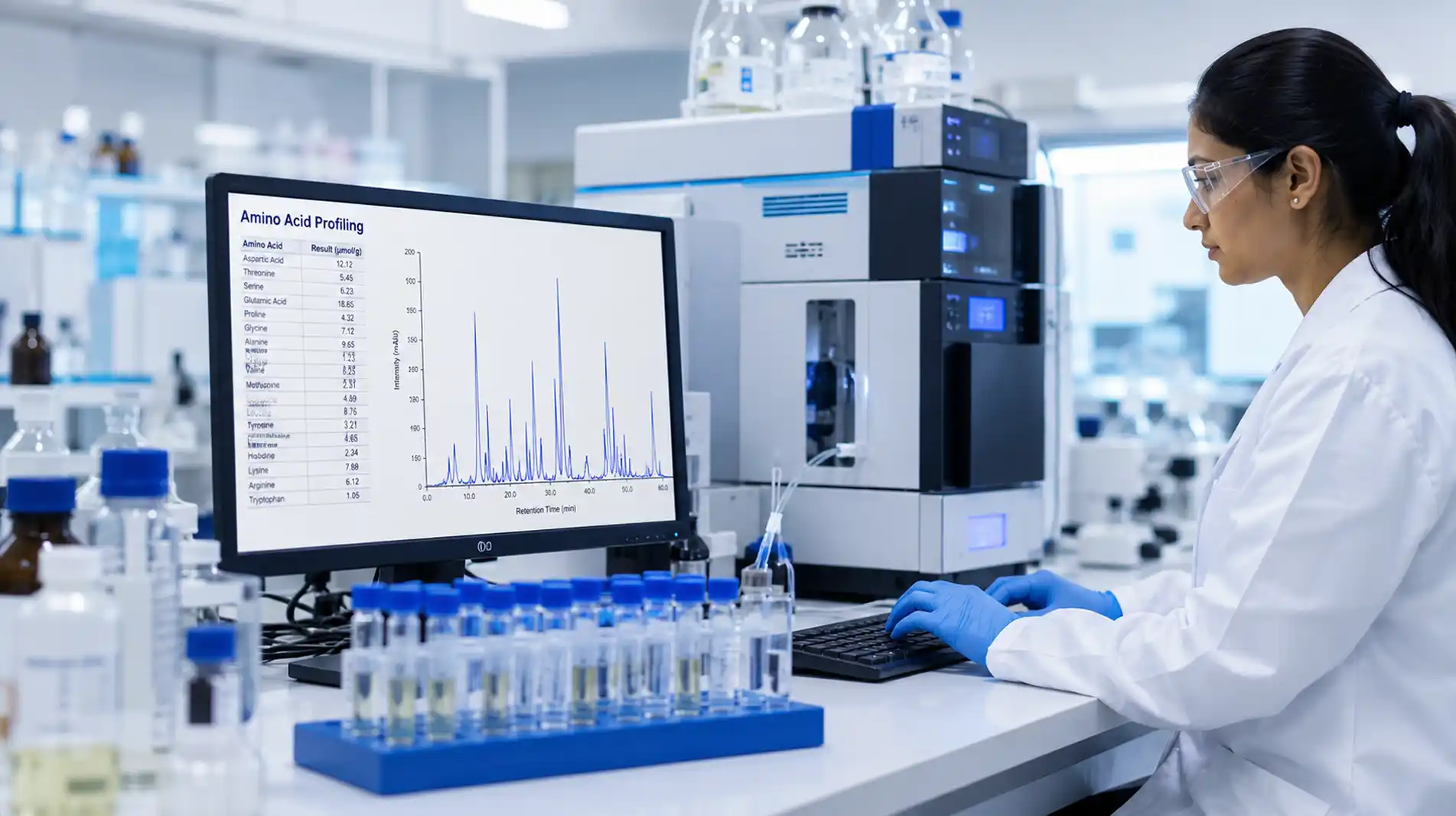
Amino acid profiling evaluates both the type and quantity of amino acids present in food, feed, nutraceuticals, and biological samples, supporting nutritional assessment, authenticity verification, and regulatory compliance.

[Detailed Description]
Advanced Amino Acid Profiling & Nutritional Analysis
Amino acid profiling is an advanced analytical approach used to determine the composition and concentration of individual amino acids across food products, animal feed, nutraceuticals, and dietary supplements. This analysis provides valuable insight into protein quality, nutritional value, and compliance with industry standards. The process typically involves protein hydrolysis followed by high-precision techniques such as HPLC or LC-MS/MS, enabling accurate quantification of both essential and non-essential amino acids. These methods support label claim validation, formulation optimization, and batch-to-batch consistency.
Widely applied in sports nutrition, infant nutrition, clinical nutrition, and animal feed development, amino acid profiling also plays a key role in detecting adulteration, verifying product authenticity, and ensuring compliance with specified nutritional requirements. All analyses are performed using validated methodologies to maintain high standards of accuracy, consistency, and traceability throughout the testing process.
Key Parameters Covered
Thorough microbiological evaluation spanning total microbial counts, pathogen detection, environmental monitoring, and specialised safety testing.

Essential Amino Acids (EAA)
Branched Chain Amino Acids (BCAA: Leucine, Isoleucine, Valine)
Non-Essential Amino Acids (NEAA)

Sulfur-containing Amino Acids (Methionine, Cysteine)
Total Amino Acid Content

Aromatic Amino Acids (Phenylalanine, Tyrosine)
We at BAS provide accurate and reliable microbiological analysis using validated methods (IS/ISO, BAM) to support regulatory compliance, product safety, and quality assurance. Our services include Preservative Efficacy Testing (PET), Bacterial Endotoxin Testing (BET), antimicrobial activity assessment, and environmental monitoring.

Significance
Amino acid profiling is essential for determining protein quality and nutritional adequacy. It ensures that products deliver the intended health benefits while meeting regulatory and labelling requirements. Accurate profiling supports product development, enhances consumer trust, and helps manufacturers maintain consistency and competitiveness in the market.

[FAQ]
Frequently Asked Questions
Why is testing of animal feed and pet food important?
Testing of animal feed and pet food is essential to ensure nutritional quality, product safety, and regulatory compliance. Analytical testing helps verify protein, fat, fiber, vitamins, minerals, and other nutritional parameters while also detecting contaminants such as mycotoxins, heavy metals, pesticide residues, and harmful microorganisms that may impact animal health and productivity.
What types of contaminants are commonly tested in animal feed products?
Animal feed and pet food are commonly tested for contaminants such as aflatoxins and other mycotoxins, heavy metals, pesticide residues, antibiotic residues, and pathogenic microorganisms including Salmonella and E. coli. These analyses help ensure feed safety, prevent disease outbreaks, and support compliance with national and international regulatory standards.
Why is microbiological testing important for poultry and aquaculture feed?
Microbiological testing helps identify harmful pathogens that may affect animal health, feed quality, and farm productivity. In poultry and aquaculture systems, contaminated feed can contribute to infections, poor growth performance, reduced immunity, and contamination of the food supply chain. Routine microbiological analysis supports safer and more sustainable production practices.
How does nutritional analysis benefit animal nutrition and performance?
Nutritional analysis provides accurate information about the composition of feed and supplements, including proteins, amino acids, fats, vitamins, and minerals. This helps manufacturers formulate balanced diets tailored to specific species and growth stages, improving animal health, feed efficiency, immunity, reproduction, and overall productivity.
Are testing services performed according to recognized quality standards?
Yes. All testing is performed using validated analytical methods under ISO/IEC 17025 quality standards. This ensures accuracy, traceability, reproducibility, and reliable results that support regulatory compliance, quality assurance, export requirements, and customer confidence.
Ensure Safe & High-Quality Animal Feed Products
Partner with Barcode Analytical Services for reliable testing solutions for animal feed, pet food, aquaculture feed, poultry additives, and nutrition supplements. Our advanced laboratory services help ensure product safety, nutritional accuracy, regulatory compliance, and market credibility.