
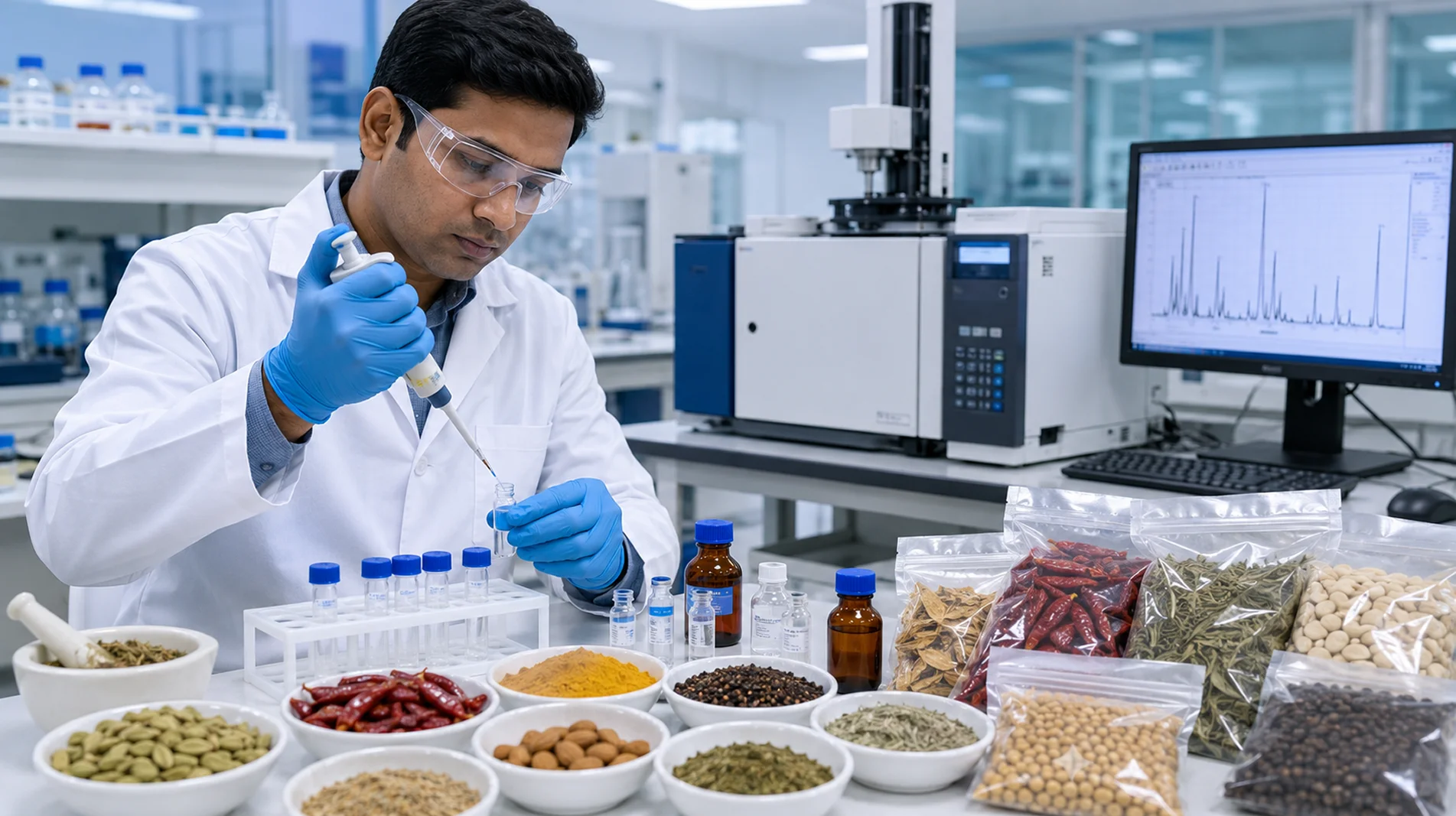

Heavy Metal Testing
Heavy metals testing detects and quantifies toxic elements in food, water, feed, and environmental samples to ensure safety, regulatory compliance, and protection of human and animal health.
[Detailed Description ]
Advanced Heavy Metal Testing & Elemental Analysis
Heavy metals testing is a critical analytical service used to identify and quantify trace levels of toxic elements in a wide range of matrices including food products, water, soil, animal feed, nutraceuticals, and environmental samples. These metals, even at low concentrations, can accumulate in the body over time and pose serious health risks.
The analysis is performed using advanced instrumental techniques such as ICP-MS, ICP-OES, and AAS, which offer high sensitivity and precision for detecting metals at trace and ultra-trace levels. Commonly tested elements include lead (Pb), cadmium (Cd), arsenic (As), mercury (Hg), and other essential and non-essential metals. This testing ensures compliance with regulatory standards such as FSSAI, WHO, and international guidelines by verifying that metal concentrations are within permissible limits. It also helps identify contamination sources arising from raw materials, water, soil, processing equipment, or packaging.
Key Parameters Covered
Comprehensive detection and quantification of toxic and trace metals for safety, quality and regulatory compliance assessment.

Lead (Pb)
Detection of lead contamination in food and environmental matrices

Mercury (Hg)
Sensitive mercury determination including methylmercury speciation

Copper (Cu)
Essential trace element monitoring at permissible thresholds

Cadmium (Cd)
Quantification of cadmium levels for human and animal safety

Chromium (Cr)
Analysis of total chromium and its toxic hexavalent form

Zinc (Zn)
Zinc level assessment in food, feed and nutraceuticals

Arsenic (As)
Total and speciated arsenic analysis in food and water

Nickel (Ni)
Nickel quantification for allergen and safety monitoring

Iron (Fe)
Iron quantification for nutritional and contamination profiling
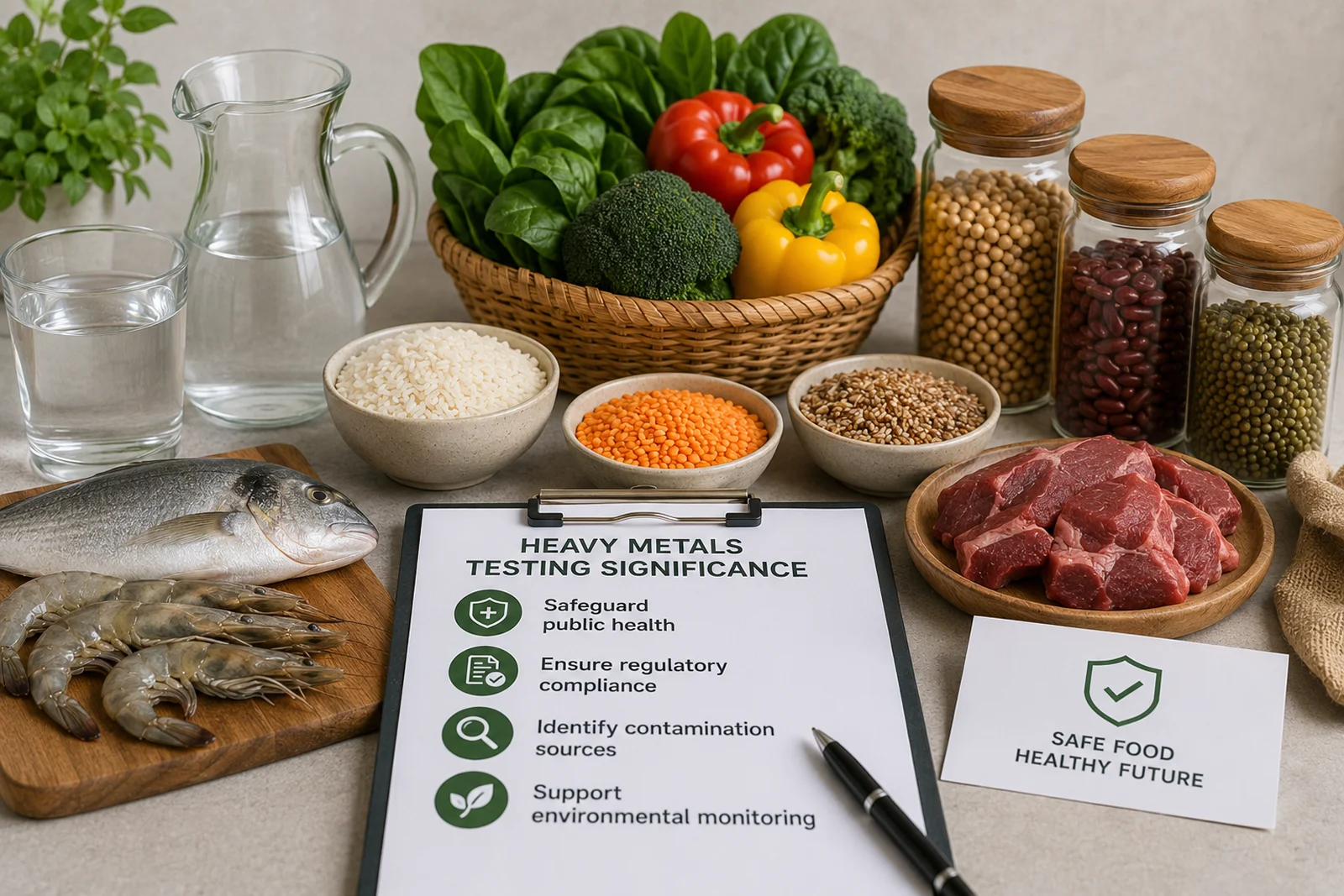
We BAS offer precise and dependable analysis to detect and quantify heavy metals in different food samples. Our services help food businesses comply with safety standards and regulations. All testing is conducted using validated methods ensuring accuracy, traceability, and reliability of results.
Significance
Heavy metals testing is essential to safeguard public health by detecting toxic elements that can cause acute and chronic health effects, including organ damage and developmental issues. Continuous exposure through contaminated food, water, or environment can lead to bioaccumulation and long-term toxicity.
This testing helps manufacturers ensure product safety, comply with regulatory requirements, and maintain consumer trust. It also supports environmental monitoring and pollution control by identifying contamination sources and enabling corrective actions.
Even small amounts of heavy metals can be harmful when consumed over time, leading to serious health issues. Hence, regular monitoring is important to ensure food safety.
- Safeguard public health
- Ensure regulatory compliance
- Identify contamination sources
- Support environmental monitoring
[FAQ]
Frequently Asked Questions
What is heavy metal testing?
Heavy metal testing is a laboratory analysis carried out to identify and measure toxic elements like lead, arsenic, cadmium, and mercury in food products, water, soil, and other matrices. These metals can contaminate food through environmental sources such as soil, water, or during processing.
Why is heavy metal testing important?
Heavy metals, even at low concentrations, can accumulate in the body over time and pose serious health risks including organ damage and developmental issues. Regular testing ensures product safety, regulatory compliance, and consumer protection.
Which analytical techniques are used?
Common techniques include ICP-MS (Inductively Coupled Plasma Mass Spectrometry), ICP-OES, and AAS (Atomic Absorption Spectrometry), which offer high sensitivity and precision for detecting metals at trace and ultra-trace levels.
How doWhich regulatory standards does heavy metal testing comply with?es nutritional analysis benefit animal nutrition and performance?
Testing is performed in compliance with standards set by FSSAI, WHO, and international guidelines, verifying that metal concentrations are within permissible limits for food safety and environmental protection.
Reliable Heavy Metal Testing
Partner with BAS for precise heavy metal testing services to detect and quantify harmful contaminants in food, water, pharmaceuticals, and other products. Our advanced analytical methods help ensure product safety, regulatory compliance, and consumer confidence.