Mycotoxin Analysis

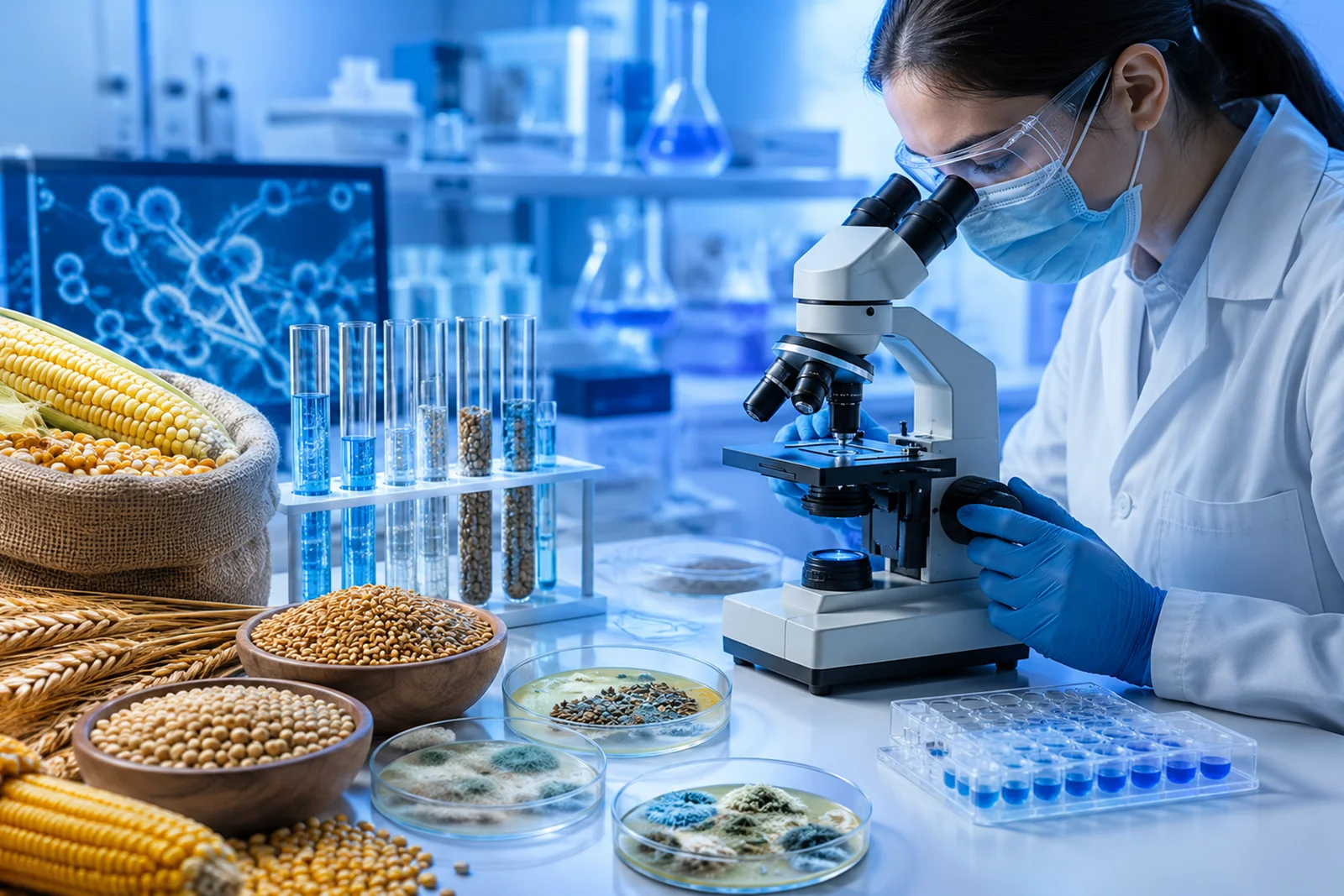
Mycotoxin analysis helps ensure the safety of food, feed, and agricultural commodities by detecting harmful fungal toxins that may contaminate products during cultivation, processing, transportation, or storage.

[Detailed Description ]

Comprehensive Microbiological Analysis & Safety Testing

Mycotoxins are naturally occurring toxic compounds produced by certain species of moulds and fungi. These contaminants can adversely affect human and animal health, making their monitoring essential throughout the food and feed supply chain. At Barcode Analyticals, we offer comprehensive mycotoxin testing solutions for a wide range of commodities, including cereals, grains, spices, nuts, oilseeds, dairy products, animal feed, and processed foods. Our laboratory utilizes advanced analytical technologies such as LC-MS/MS, HPLC-FLD, and GC-MS/MS to accurately identify and quantify multiple mycotoxins at trace levels.
Our testing services cover major regulated mycotoxins, including aflatoxins, aflatoxin M1, ochratoxin A, fumonisins, zearalenone, deoxynivalenol (DON), patulin, and other emerging mycotoxins. All analyses are performed using validated methods and comply with national and international regulatory requirements. The generated data assists manufacturers, exporters, importers, and regulatory bodies in verifying product safety, meeting statutory requirements, and maintaining consumer confidence.

Comprehensive Microbiological Analysis & Safety Testing

Key Parameters Covered

Thorough microbiological evaluation spanning total microbial counts, pathogen detection, environmental monitoring, and specialised safety testing.
Deoxynivalenol (DON)

Deoxynivalenol (DON)

a mycotoxin frequently found in wheat, barley, oats, and other cereal grains.

Aflatoxins (B1,B2,G1,G2)

Aflatoxins (B1,B2,G1,G2)

Toxic compounds produced by certain molds that can contaminate food products and pose health risks.

Aflatoxin M1

Aflatoxin M1

A metabolite of aflatoxin B1 commonly found in milk and dairy products from animals exposed to contaminated feed.

Ochratoxin A

Ochratoxin A

A mycotoxin produced by fungi that can contaminate cereals, coffee, dried fruits, and other food products

Significance

Significance

Ensures compliance with regulatory limits established by Food Safety and Standards Authority of India, Bureau of Indian Standards, and Codex Alimentarius Commission. Supports food and feed safety programs.Facilitates domestic and international market access.

[Blogs & case studies]

Knowledge Hub for Analytical Testing & Research

[FAQ]

Frequently Asked Questions

What are mycotoxins?
Mycotoxins are toxic substances produced by certain molds and fungi that can contaminate food, feed, and agricultural products, posing potential health risks to humans and animals.
Mycotoxin testing helps identify harmful contaminants in products, ensuring food safety, regulatory compliance, and protection of consumer health.
Mycotoxins are commonly tested in grains, cereals, nuts, spices, dried fruits, animal feed, dairy products, coffee, and processed foods.
Commonly tested mycotoxins include Aflatoxins, Aflatoxin M1, Ochratoxin A, Fumonisins, Zearalenone, Deoxynivalenol (DON), Patulin, and T-2/HT-2 toxins.
Advanced analytical techniques such as LC-MS/MS, HPLC, and ELISA are used to accurately detect and quantify mycotoxins in various sample types.
Testing helps businesses verify that mycotoxin levels are within permissible limits set by national and international food safety authorities, supporting market access and consumer trust.

Ensure Mycotoxin Safety

Partner with BAS for reliable mycotoxin testing services to detect harmful contaminants, ensure regulatory compliance, and safeguard the quality and safety of your products.
Scroll to Top