
Antibiotics
Antibiotic residue testing detects and quantifies residual antibiotics in food, feed, and biological samples to ensure safety, regulatory compliance, and prevention of antimicrobial resistance.

[Detailed Description ]
Antibiotic Residue Testing for Food Safety and Regulatory Compliance
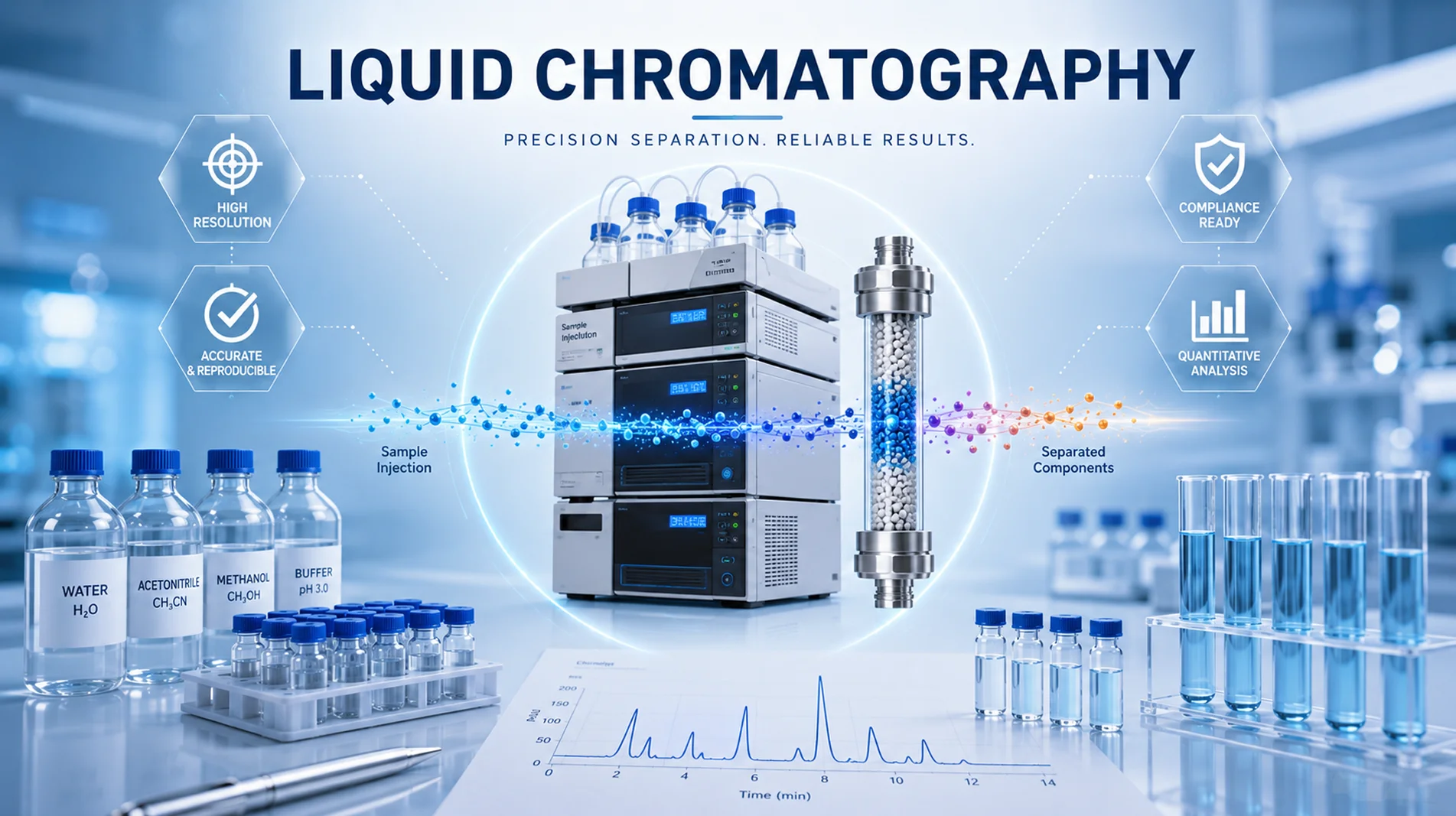
Antibiotic residue testing is a critical analytical service used to detect and quantify trace levels of antibiotics present in food products, animal-derived products, feed, and environmental samples. The use of antibiotics in livestock, aquaculture, and veterinary practices can lead to residual presence in milk, meat, eggs, and seafood if proper withdrawal periods are not followed.Advanced analytical techniques such as LC-MS/MS are employed to provide highly sensitive and accurate detection of multiple antibiotic classes at trace levels. These include tetracyclines, sulphonamides, fluoroquinolones, dyes.
This testing ensures compliance with regulatory standards such as FSSAI, EU Regulations, BAP Regulations, Codex Alimentarius, and international Maximum Residue Limits (MRLs). It also plays a vital role in addressing the global concern of antimicrobial resistance (AMR) by ensuring that antibiotic residues do not enter the food chain.All analyses are conducted using validated methods under EU Regulations, ensuring accuracy, traceability, and reliability of results.
Key Parameters Covered

Tetracyclines
Chloroxuron’s

Sulfonamides
Nitrofurans

Quinolones and Fluoroquinolones

Chloramphenicol
Significance
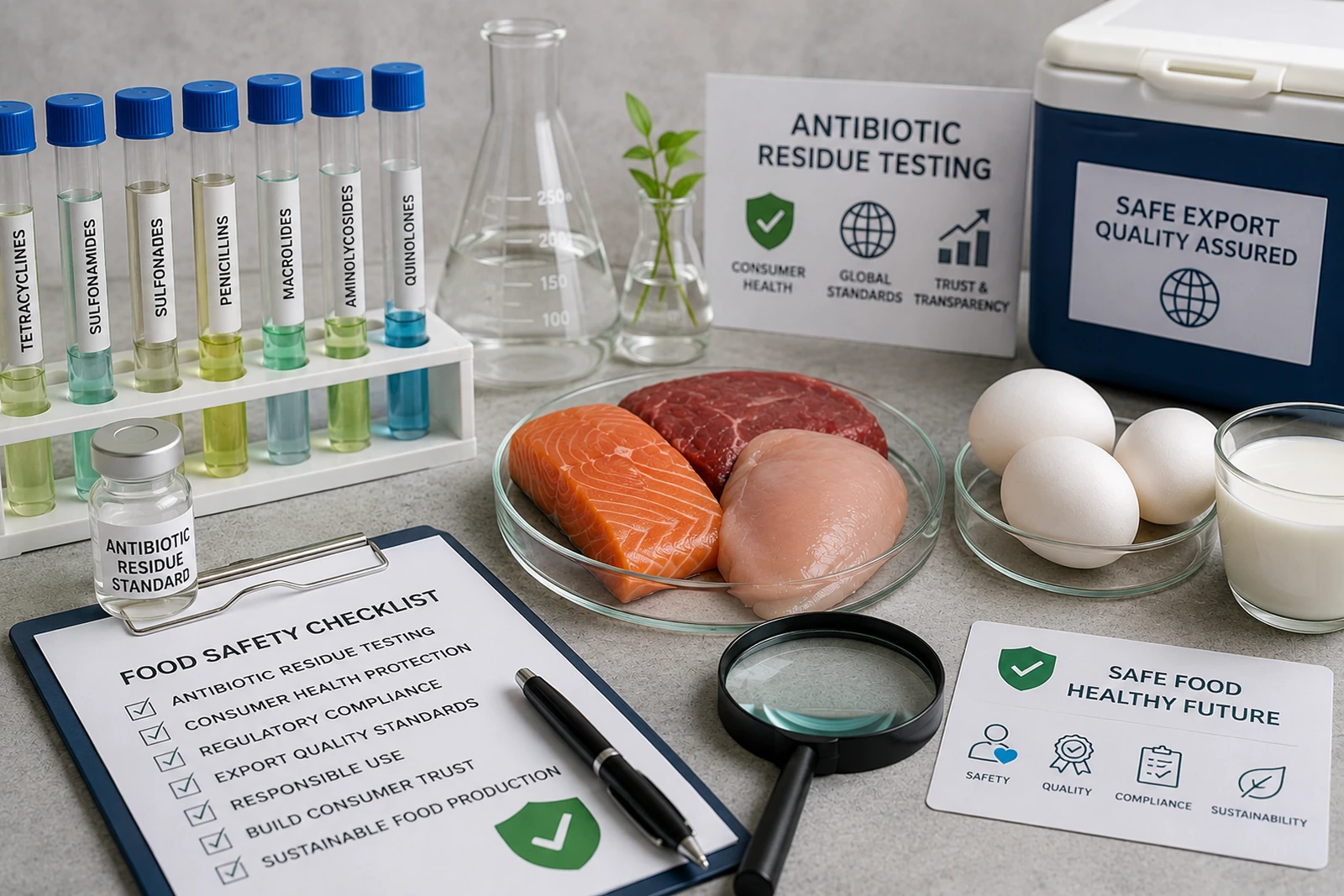
Antibiotic residue testing is essential to protect consumer health and ensure food safety. The presence of antibiotic residues in food can lead to allergic reactions, toxicity, and more importantly, contribute to the development of antimicrobial resistance, a major global health concern and important to exporting to all countries.
This testing helps producers and manufacturers ensure compliance with regulatory limits, maintain export quality standards, and build consumer trust. It also supports responsible use of antibiotics in agriculture and promotes sustainable food production practices.
[FAQ]
Frequently Asked Questions
What is antibiotic residue testing?
Antibiotic residue testing is an analytical process used to detect and quantify trace levels of antibiotics present in food, feed, animal-derived products, biological samples, and environmental samples.
Why is antibiotic residue testing important?
It is important because antibiotic residues in food can affect consumer health, cause allergic reactions, and contribute to antimicrobial resistance. It also helps ensure compliance with national and international safety standards.
Which products commonly require antibiotic residue testing?
Commonly tested products include milk, meat, eggs, seafood, aquaculture products, animal feed, and other food products of animal origin.
Which antibiotic groups can be tested?
Common antibiotic groups include tetracyclines, sulfonamides, fluoroquinolones, chloramphenicol, nitrofurans, and other regulated antibiotic residues.
Does antibiotic residue testing support export compliance?
Yes. This testing helps verify compliance with FSSAI, EU Regulations, Codex Alimentarius, BAP Regulations, and international Maximum Residue Limits (MRLs), supporting export quality and market acceptance.
Antibiotic Residue Analysis
Partner with BAS for accurate antibiotics testing services to detect and quantify antibiotic residues in food, feed, and related products. Our advanced analytical methods help ensure product safety, regulatory compliance, and consumer confidence while supporting quality assurance programs.